How to explain Diwali to kids: a 60-second script for preschoolers
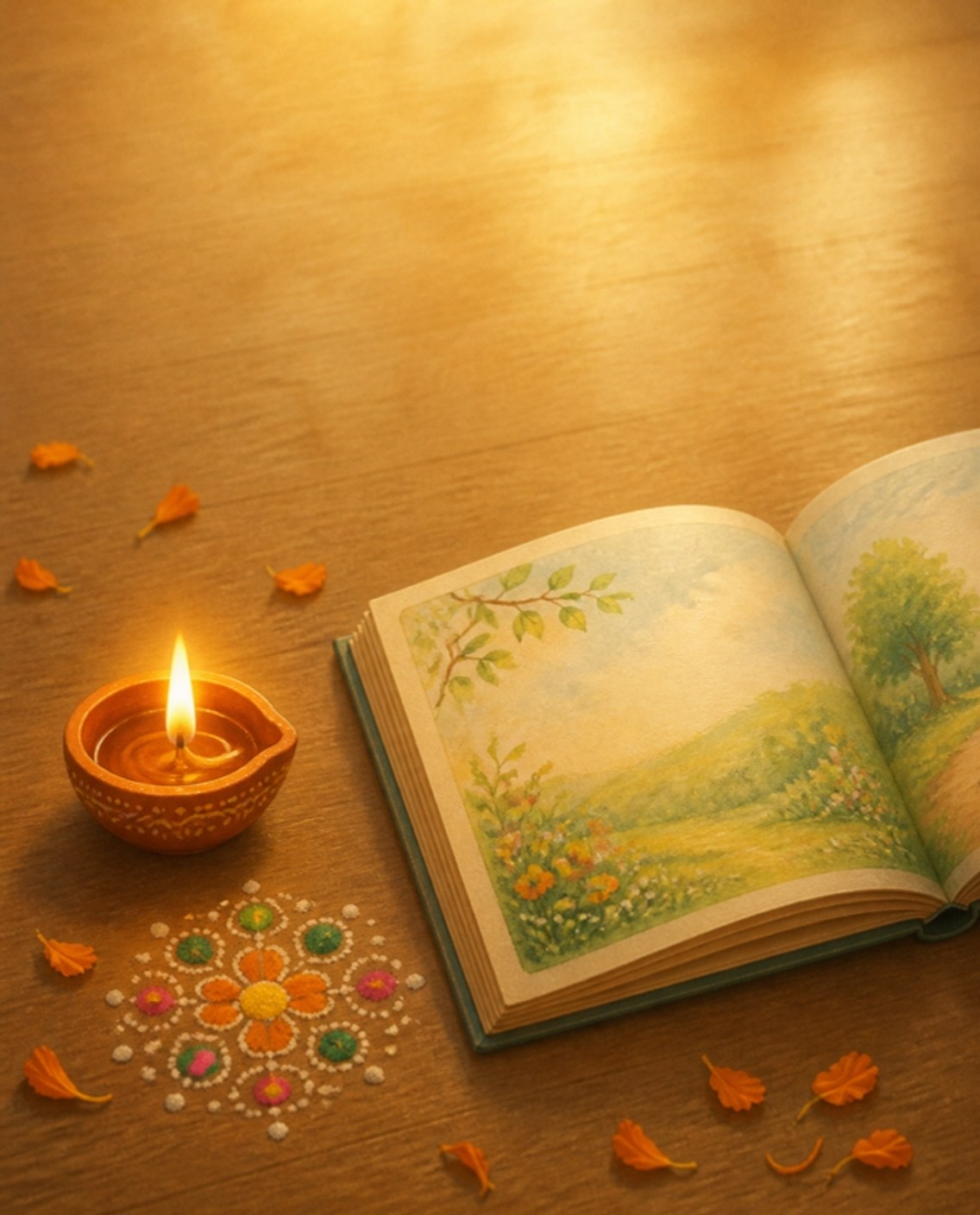
Your three-year-old has spotted the lamps in a neighbour's window, and now comes the question: "What's that for?" You have about sixty seconds before their attention moves on. Here is how to explain Diwali to kids in that minute, in words a preschooler understands, whether your family celebrates every year or you are learning about it alongside your child.
Why sixty seconds is enough
Young children don't need the whole festival at once. They learn best from short, concrete words, things they can see and touch, and hearing the same idea again and again. One clear minute tonight, then a little more tomorrow when they see another lamp, does more than a long story they wander away from.
So the aim is not to teach everything. It is to give your child one warm idea they can hold on to: people light lamps because light is stronger than the dark.
The 60-second script
Read it as it is, or put it in your own words. Pause wherever your child wants to look or ask.
"See the little lamp? It's called a diya. Lots of families are having a festival called Diwali. Some people call it Deepavali.
At Diwali, people light lamps to show that light is stronger than the dark, and good is stronger than bad.
They wear new clothes, make bright patterns on the ground, and share sweets with family and friends.
The lamp is hot, so we look with our eyes, not our fingers.
If you see a friend celebrating, you can say: Happy Diwali!"
That's it. Five short pieces: the name, the big idea, what people do, one safety rule and something kind to say.
Make it fit your child's age
Around two. Keep it to the senses. "Look, a light! It's bright. It's hot, so no touching. Pretty!" Toddlers learn from naming what they see, so point and name: lamp, light, colours, flowers.
Around three. Add one story sentence. "A long time ago a brave hero came home, and everyone lit lamps to say welcome." Many families tell the story of Rama and Sita; in South India and many Tamil homes, Deepavali remembers Krishna's victory over Narakasura. If your family has its own story, tell that one.
Four and five. They can handle the bigger idea and the "why". Talk about light over darkness and kindness over unkindness, and ask what makes them feel bright inside. They may love knowing that Deepavali means "row of lights", and that both names are right.
The questions your preschooler will probably ask
"Why do people light lamps?"
"To show that light is stronger than the dark. It's a happy, hopeful feeling."
"Can I touch the diya?"
"No, the flame is hot. We look with our eyes." Keep real flames up high and out of reach, and stay close.
"Why don't we have Diwali?"
"Different families have different celebrations. Some families celebrate Diwali. We can still learn about it and say Happy Diwali to our friends."
"Is Diwali like Christmas?"
"They are different festivals with their own stories. Both are happy times when families get together, share food and give to each other." Comparing gently helps children connect something new to something they already know.
"What are those loud bangs?"
Fireworks can startle little ones. "That's a big noise far away. You are safe with me." If your child finds noise hard, a quiet room, a cuddle or soft music can help.
Turn the words into something they can do
Preschoolers remember what they do far longer than what they hear. Pick one of these, each takes only a few minutes:
- Light spotting. Go for a short evening walk and count the lamps and fairy lights you can see.
- Dot patterns. Draw a few dots with chalk on the path and join them into a shape, like a simple rangoli. It's early maths too: patterns, shapes and counting.
- A picture book. Binny's Diwali by Thrity Umrigar is about sharing a festival with friends who have never seen it.
- Say it together. Practise "Happy Diwali" and "Happy Deepavali" so your child is ready to say it to a friend.
Why this matters for young children
Learning about a friend's festival is one of the first ways children discover that families do things differently, and that different is interesting, not strange. For a child whose family celebrates, hearing Diwali talked about kindly by grown-ups outside home helps them feel they belong.
It also ties in with Australia's Early Years Learning Framework, which hopes children feel connected with and contribute to their world, and learn to respect diversity.
If you would like the fuller picture, including the two names, the stories and the five days, read our guide: What is Diwali (Deepavali)? Explaining the festival of lights for kids.
Diwali at Little Stars in Toongabbie
At Little Stars, we mark Diwali and Deepavali with lamps, colour and sweets, along with food, music and dance, alongside the other celebrations we look forward to all year round. Children hear new words, try new tastes and see their friends' traditions celebrated.
Happy Diwali and Happy Deepavali to all our families.
Come and see for yourself.
Book a tour of our Toongabbie centre, meet the educators and see all three rooms.
Keep reading
What is Diwali (Deepavali)? Explaining the festival of lights for kids
The story, the lights, rangoli and easy, safe ways to enjoy the festival with young children, whether your family celebrates every year or is hearing about it for the first time.
Read articleSpending on Day Care: How Much Does It Cost to Send Your Child to Day Care in Toongabbie?
What shapes day care fees in Toongabbie, what families typically pay, and the financial help available through government subsidies.
Read article